Practice · Method
Reading the haze the night before
Fog is not in the forecast, but the three things that make it are, and they can be read at ten at night.
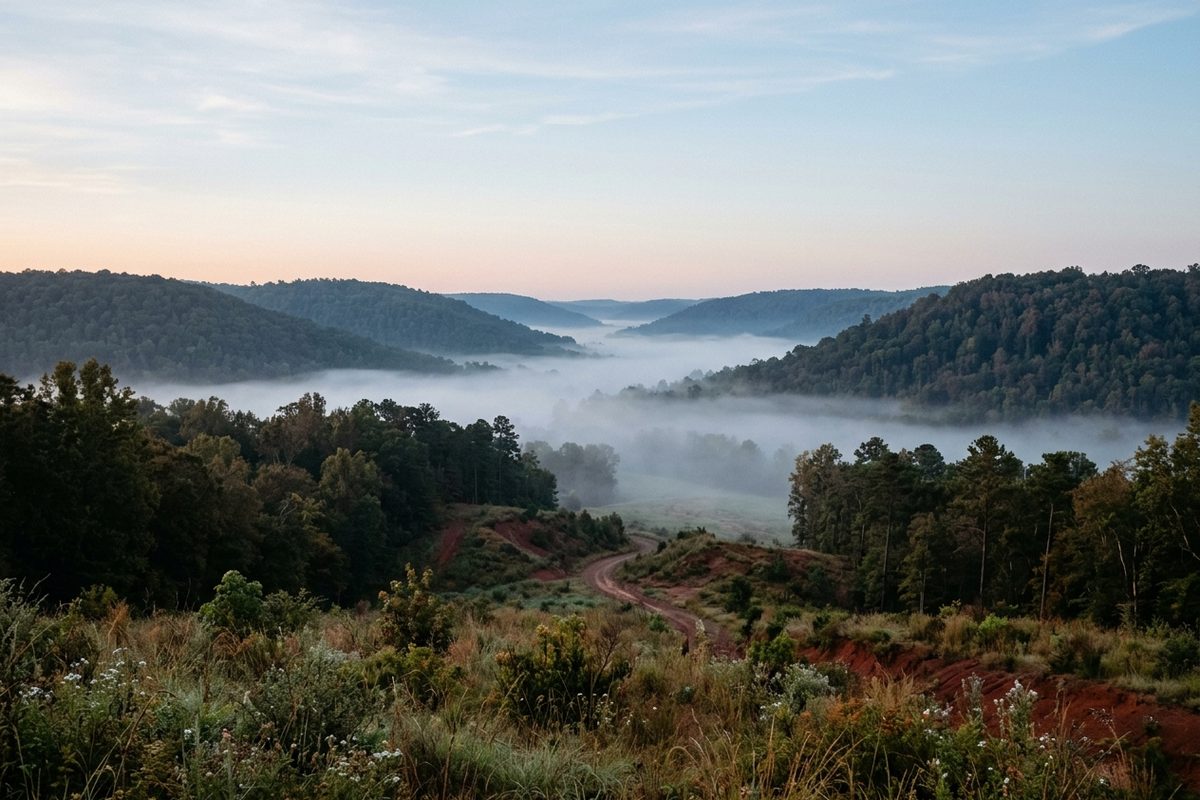
No forecast will tell you there will be fog on a specific river at six in the morning. What a forecast will tell you is the three conditions that decide it, and those can be read at ten the night before with about five minutes of attention.
Getting this right is what separates a hit rate of two mornings in three from one in three. Over a summer that is a lot of driving.
The three numbers
How close the temperature will get to the dew point. This is the whole thing. Air holds a certain amount of water at a certain temperature, and when it cools to the dew point it cannot hold what it has, and the difference becomes visible. If the overnight low is forecast to reach or nearly reach the dew point, you are in business. If the low is fifteen degrees above it, no amount of clear sky will help.
Wind. Fog forms in a still layer near the ground. Any sustained breeze mixes that layer with drier air above and the fog never gets started, or forms and then tears apart. Under about three or four miles an hour is what you want. Wind is the reason for most failed attempts, and it is the number people ignore because the fog forecast said yes.
Sky cover. Clear skies let the ground shed heat overnight, so the air above it cools fastest. Cloud acts like a lid and keeps the ground warm, which keeps the temperature well above the dew point. A clear, still, humid night is the trifecta.
Nearly every wasted drive in two years came from checking the first number and the third and skipping the second.
Then the ground
The numbers tell you whether fog is possible in the region. The shape of the land tells you where it will actually be.
Cold air is heavy and it runs downhill. Overnight it drains off slopes into valleys, river bottoms and any hollow, and it pools there. This is why a valley can be full to the brim while the ridge above it is perfectly clear, and why a five minute drive can take you from nothing to everything.
So the rule is: go low, and go where water is. River corridors, creek bottoms, lakes, gorges, low farm ground. Not hilltops, unless you specifically want to be above the layer looking down at it, which is a different and often better photograph.
Water temperature is a separate lever. A river fed from the bottom of a reservoir runs cold all summer, and cold water under warm air makes its own fog regardless of what the night did. That is the mechanism described in the river account, and it is why that river is the reliable one: it does not need a special night, it manufactures the conditions itself.
When to check, and what to check twice
Look at ten at night, not at four in the morning. Four in the morning is too late to change the plan and you will go anyway.
The number to look at twice is wind, because it changes between the evening forecast and the overnight and because a shift from calm to five miles an hour is the difference between a full valley and an empty one.
The second thing worth a second look is the gate. Several of the places worth going to have opening hours, and a summer sunrise can be earlier than the gate. Arriving to a closed gate with perfect conditions on the other side of it is the most frustrating way to lose a morning, and it is entirely avoidable the night before.
How long it lasts once it exists
Not long, and less than you plan for.
Valley fog is destroyed by the sun that makes it visible. Direct light warms the ground, the ground warms the layer, the layer lifts and comes apart. The gap between good and gone is often twenty minutes and rarely more than an hour.
The practical consequence is that you must be in position before it is worth looking at. Arriving as the light gets good means arriving as the light gets good and then leaving. Arriving forty minutes earlier, in the dark, having chosen the spot the night before, means the whole window.
What the forecast word is worth
Almost nothing, on its own.
The forecast will say fog when the model expects widespread fog over a broad area. It says nothing when the fog will be a two hundred yard band on one river, which is the case for most of the good mornings in this file. Some of the best have come on nights the forecast described as clear.
Read the ingredients rather than the summary. Overnight low against dew point, wind under four, clear sky, low ground with water in it. When those four line up, go, whatever the summary line says. When the wind is up, stay in bed regardless of how confident the summary is.
- Filed under
- Practice
- Where
- North and central Georgia
- Hour
- The night before, around ten
- On foot
- None
- Written by
- Cass Ledbetter
Nothing here is sold. No fee was taken for any place named on this page.